
Skills Planning
A complete guide to understanding, implementing, and managing Skills Planning within the PSET sector.
Skills Planning is the foundation of workforce development, institutional strategy, and national skills priorities. It ensures that SETAs, employers, TVET Colleges, Universities, and Skills Development Providers identify skills needs, plan interventions, and align programmes with labour market demands. This pillar provides a structured, practical, and governance‑aligned overview of Skills Planning processes, tools, compliance requirements, and reporting expectations.
What this pillar covers
This pillar explains the full Skills Planning ecosystem, including:
Workplace Skills Plans (WSP)
Annual Training Reports (ATR)
Sector Skills Plans (SSP)
Labour market analysis
Skills demand vs supply
DG allocation alignment
Institutional skills planning
National Skills Development Plan (NSDP) alignment
Roles of SETAs, employers, providers, and institutions
Compliance requirements
How Skills Planning links to DG, PFMA, QCTO, M&E, and APP
Why Skills Planning matters
Skills Planning ensures that institutions and sectors invest in training that responds to real labour market needs, supports economic growth, and aligns with national priorities.
Compliance
Skills Planning supports mandatory grant submissions, DG allocations, and PFMA‑aligned planning processes.
Governance
Strong Skills Planning strengthens oversight, transparency, and strategic alignment.
Performance
Skills Planning ensures that training programmes deliver measurable impact and support APP targets.
Key Components
Workplace Skills Plan (WSP) Employer‑submitted plan outlining skills needs and training priorities.
Annual Training Report (ATR) Report on training implemented during the previous year.
Sector Skills Plan (SSP) SETA‑developed plan outlining sector skills needs, trends, and priorities.
Labour Market Analysis Understanding demand, supply, shortages, and emerging occupations.
DG Allocation Alignment Ensuring DG funding supports sector priorities and skills gaps.
Institutional Skills Planning TVETs, Universities, and Providers aligning programmes to sector needs.
National Skills Development Plan (NSDP) Alignment with national priorities and DHET strategic direction.
Data Collection & Evidence Accurate, verifiable data for planning and reporting.
Integration with DG, PFMA, QCTO, M&E, APP Ensuring Skills Planning supports all governance and performance pillars.
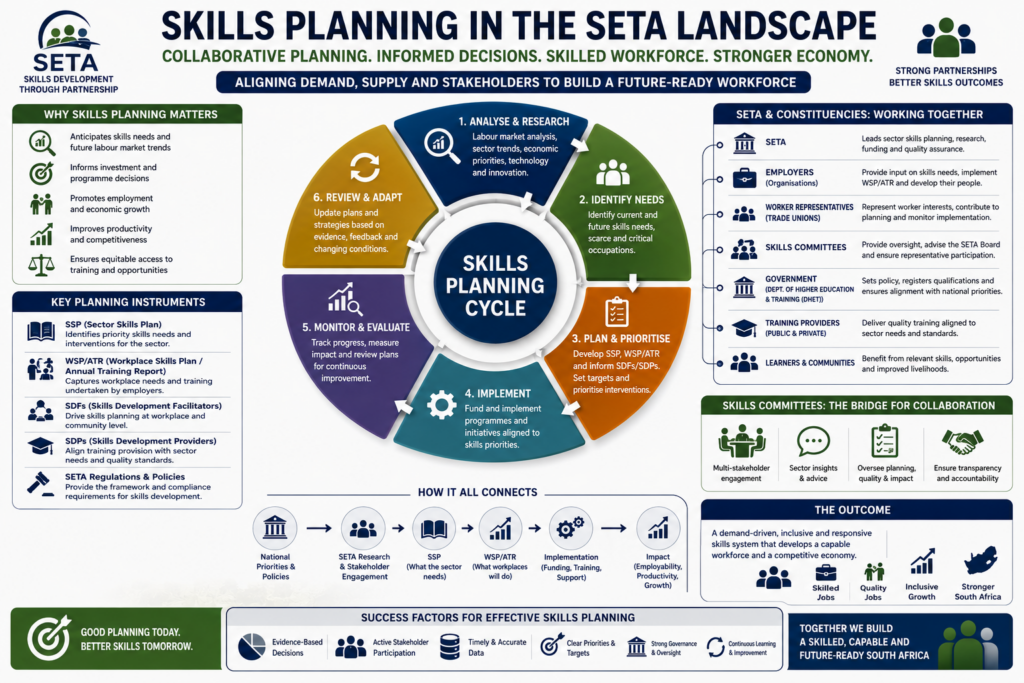
How Skills Planning Links to other Pillars
DG Administration
DG allocations must be based on SSP priorities and WSP/ATR data.
PFMA Compliance
Skills Planning supports budgeting, resource allocation, and performance reporting.
Risk Management
Skills gaps and labour market shortages are strategic risks.
QCTO Accreditation
Occupational qualifications must respond to sector skills needs.
Monitoring & Evaluation
M&E verifies whether training addresses identified skills gaps.
APP Alignment
Skills Planning informs APP indicators and targets.
Roles of Key Stakeholders
SETAs
Develop SSPs
Analyse labour market trends
Approve WSP/ATR submissions
Allocate DG funding
Support employers and providers
Report sector priorities to DHET
Submit WSP/ATR
Identify workplace skills needs
Implement training
Provide workplace learning opportunities
Skills Development Providers
Align programmes to sector needs
Support employers with WSP/ATR
Deliver training aligned to SSP priorities
TVET Colleges & Universities
Align curricula to labour market needs
Partner with employers
Provide occupational and academic pathways
DHET
Oversees national skills planning
Aligns SETA SSPs with national priorities
Skills Planning Guides and Articles
WSP/ATR Guide
Explains how employers complete Workplace Skills Plans (WSP) and Annual Training Reports (ATR) correctly and in alignment with SETA requirements.
SSP and Labour Market Analysis Guide
Provides clarity on how SETAs analyse skills demand and supply and develop Sector Skills Plans (SSPs).
DG and APP Alignment Guide
Explains the correlation between Skills Planning, DG allocations and APP target setting.
Frequently Asked Questions (FAQ)
- What is the purpose of Skills Planning? To identify skills needs and align training to labour market demands.
- Who is responsible for Skills Planning? Employers, SETAs, Providers, Institutions, and DHET.
- What documents are required? WSP, ATR, SSP, labour market analysis, evidence, DG alignment reports.
- How does Skills Planning link to DG? DG allocations must support sector priority skills identified in SSPs.
- What are the reporting requirements? WSP/ATR submissions, DG alignment reports, SSP updates, APP reporting.
Related Pillars
DG Administration
PFMA Compliance
Risk Management
QCTO Accreditation
Monitoring & Evaluation
APP Alignment
Need Support?
Connect with us if you need additional information, guidance or support with developing Skills Planning frameworks, analysing labour market trends, or aligning WSP/ATR submissions with SSP priorities.