
PFMA Compliance
A complete guide to understanding, implementing, and managing Public Finance Management Act (PFMA) compliance within the PSET sector.
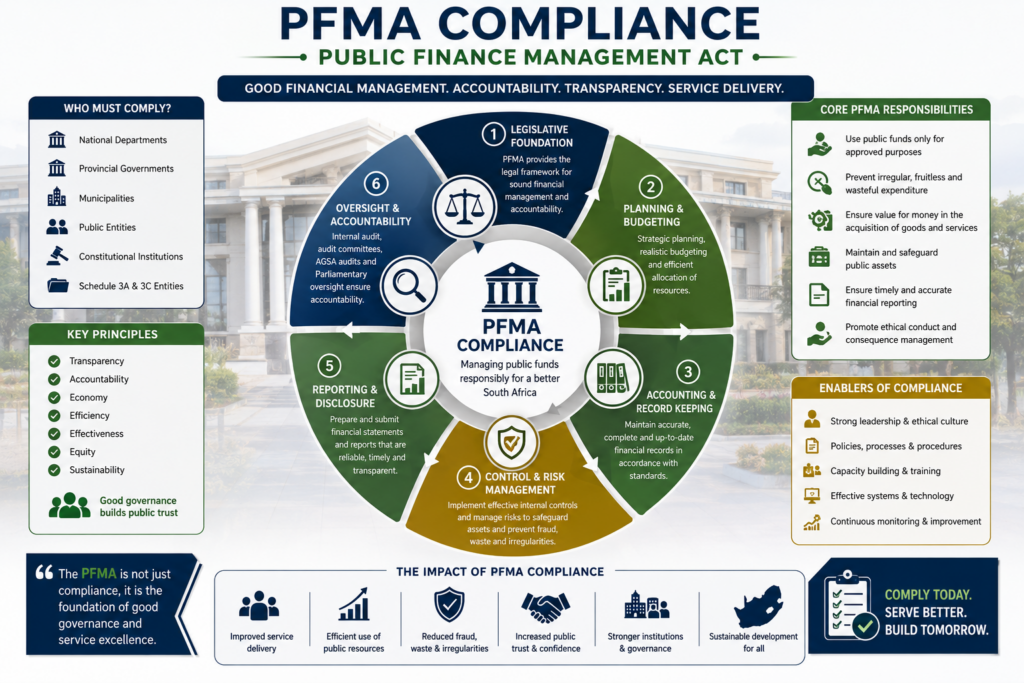
PFMA Compliance includes the full spectrum of financial governance, internal controls, and reporting obligations required to ensure accountability and transparency in the use of public funds.
What this pillar covers
This pillar covers:
PFMA legislative requirements
Treasury Regulations
Internal control frameworks
Financial management principles
Compliance responsibilities of accounting officers
Reporting and disclosure requirements
Auditor‑General (AG) expectations
Risk management and fraud prevention
DG, QCTO, and M&E alignment with PFMA
Consequence management
Why PFMA compliance matters
PFMA compliance ensures that public institutions manage funds responsibly, prevent irregular expenditure, and maintain strong governance practices. It is the backbone of accountability in the PSET sector.
Compliance
PFMA provides the legal framework for financial management, internal controls, and audit readiness.
Governance
Strong PFMA compliance strengthens oversight, transparency, and ethical financial conduct.
Performance
PFMA‑aligned controls improve reporting accuracy, reduce audit findings, and support effective programme delivery.
Key Components
- PFMA Legislative Framework — Understanding the Act, Treasury Regulations, and institutional obligations.
- Internal Control Systems — Designing and implementing controls to prevent errors, fraud, and irregular expenditure.
- Financial Management Principles — Budgeting, expenditure control, commitments management, and reconciliations.
- Audit Readiness — Preparing AG‑aligned documentation, evidence, and compliance reports.
- Risk Management — Identifying and mitigating financial and operational risks.
- Reporting Requirements — Monthly, quarterly, and annual reporting obligations.
- Consequence Management — Processes for addressing non‑compliance and irregularities.
- Delegations of Authority — Ensuring proper approval structures and accountability.
- Supply Chain Management (SCM) — PFMA‑aligned procurement processes and controls.
PFMA Guides and Articles
PFMA Internal Control Guide
A practical guide to understanding and implementing PFMA‑aligned internal controls within public institutions and SETAs.
PFMA Compliance Guide
A complete guide to understanding PFMA compliance requirements for SETAs, TVET Colleges, and public institutions.
PFMA Audit Preparation Guide
A guide to preparing for Auditor‑General (AG) audits in PFMA‑regulated institutions.
Frequently Asked Questions (FAQ)
- What is the purpose of PFMA? To ensure transparent, accountable, and responsible financial management in public institutions.
- Who is responsible for PFMA compliance? Accounting officers, CFOs, managers, and all officials involved in financial processes.
- What documents are required for PFMA compliance? Policies, delegations, internal control frameworks, reconciliations, financial reports, and audit evidence.
- How does PFMA link to DG Administration? DG processes must follow PFMA controls, reporting principles, and audit requirements.
- What are the reporting requirements? Monthly financial statements, quarterly performance reports, annual financial statements, and AG audit submissions.
Related Pillars
DG Administration
Risk Management
Monitoring & Evaluation
QCTO Accreditation
Skills Planning
- APP Alignment
Need Support?
If you need additional information, guidance or support with PFMA controls, preparing for AG audits, or aligning your DG and M&E processes with PFMA requirements, contact Skills Evolution Unleashed.